

Support
Student Wellbeing
We are a 'Healthy School'
 Bristol Cathedral Choir School is one of Bristol’s ‘Healthy Schools’ as we place strong emphasis on the holistic development of our students. We are committed to fostering an environment that nurtures not only academic success but also the overall wellbeing of each individual. Through powerful knowledge, rich co-curricular offerings, intelligent intervention and robust support systems, we strive to promote physical, mental, spiritual and digital wellness. We empower students to navigate challenges, build resilience, and cultivate a positive and balanced approach to their life and educational journey.
The Five Ways to Wellbeing
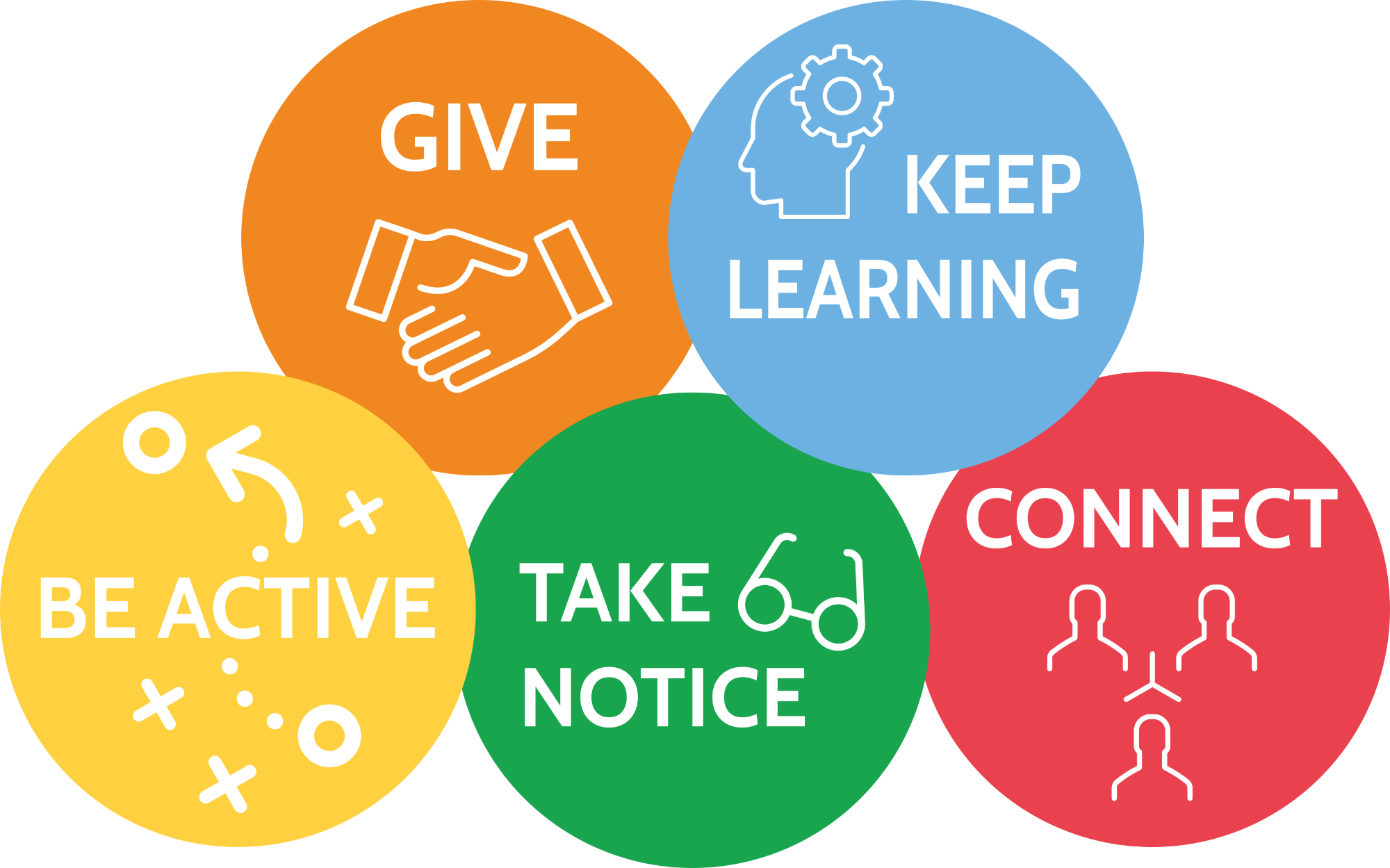
We follow the evidence-based Five Ways to Wellbeing, which provide simple actions to support positive mental health. These five areas — Connect, Be Active, Keep Learning, Give to Others, and Take Notice — encourage students to build strong relationships, stay physically active, develop new skills, engage with their community, and remain mindful of the world around them. Together, these approaches support emotional balance, resilience, and a sense of purpose.
Further information on the Five Ways to Wellbeing
- Five Ways to Wellbeing: a report researched and developed by the New Economics Foundation
- Find out more about the 5 ways to wellbeing on the MIND website
Support in School
Students in year 7-11 have regular PSHEe lessons that act as our universal safeguarding offering. Young people at BCCS also benefit from a warm and experienced pastoral team who work closely with the safeguarding team to ensure every child is supported. All students are encouraged to identify a trusted adult that they feel comfortable talking to, in school. Many choose their Head of Year, Pastoral support leader or their tutor. Students in Years 7-11 see their form tutor each morning for registration, providing continuity and a trusted adult they can rely on daily. In Years 12 and 13 students have regular group sessions with their tutor and 1:1 appointments.
For Years 7-11, Pastoral colleagues are available at break times, and the safeguarding team can be accessed at lunch, after school, or in case of emergencies. In Years 12 and 13, students have access to the Sixth Form Leadership Team, Heads of Year and the Pastoral Lead within the Sixth Form offices.
We have well-established in-house partnerships with the School Nursing service and a team of highly valued School counsellors. The pastoral and safeguarding team hold a wealth of knowledge and can confidently signpost to external agencies that provide specialist and targeted support. This network ensures that students receive the right support at the right time, tailored to their individual needs.
Local Support: We recommend Family Hubs
Family Hubs are local centres that offer information, advice and help to all families in Bristol. They offer a listening ear, expert advice, parenting guidance, youth services, and emotional wellbeing support. This means you only need to go to one place for information; professionals will work together to give you advice and you only need to explain what you need help with once.
You can find your nearest Family Hub and explore the services they offer through the Bristol City Council website.
Mental Health Support

As well as promoting the 5 ways to wellbeing, PSHEe lessons provide opportunities to discuss emotions, relationships, and healthy coping strategies that build resilience. Students learn about the teenage brain and begin to unpick indicators of good and poor mental health.
At times it may be necessary to refer a young person to external services that can support them (Off the Record, Primary Mental Health Specialist, CAMHS) we will do so only with the young person’s consent. To manage expectations, the thresholds of accessing support may seem high. Please see this document as a guide on what services may be appropriate.
For those seeking signposting or to self-refer to additional support around mental health, families and students can browse a range of local and national services in the Bristol Mental Health and Wellbeing Directory for Young People (with links to North Somerset and South Gloucestershire also) and via the links below. If you would like to discuss which services may be appropriate, contact the safeguarding team.
E-Safety and Digital Wellbeing
 Bristol Cathedral Choir School is a phone-free-school. We require phones to be turned off and to remain in bags throughout the school day and until students have left the school site. This decision was made to cultivate a calmer, more focused learning environment where students can fully engage with lessons, peers, and school life without digital distraction. Removing mobile phones reduces interruptions to learning, supports positive behaviour and relationships, and helps protect students’ wellbeing by limiting screen time and social media pressures during the school day. A phone-free approach also encourages face-to-face interaction and independence, while supporting the safeguarding of staff and students and a clearer boundary between school and online life.
Staying safe online is an important part of wellbeing. We provide guidance and resources for students to navigate the digital world responsibly and promote use of CEOP when someone feels unsafe online. For parents and carers, trusted advice is available through National College’s Online Safety guides, as well as Internet Matters. These sites offer age-appropriate guidance and practical tools for safe and mindful internet use.
We ask that parents work with us in monitoring internet usage and screen-time, ensuring they allow access only to age appropriate content, apps and platforms. As a rule, we suggest you focus monitoring and conversations around the 4 C’s of internet safety:
-
Content: is there evidence of exposure to inappropriate, illegal, or harmful material, such as pornography, hate speech, or extremist content?
-
Contact: Do you know who your child is talking to? Is there evidence of harmful interactions with other users, including grooming, pressure from peers, or adults who could be pretending to be children?
-
Conduct: How would you describe your own child’s behaviour online? Do you see evidence of cyberbullying, sharing inappropriate images, or participating in risky online activities?
-
Commerce: Is your child able to access money or transfer funds online? Is there evidence of risks associated with online transactions, such as online gambling, phishing scams, inappropriate advertising, or financial exploitation?
Reporting Harmful Online Content Tool
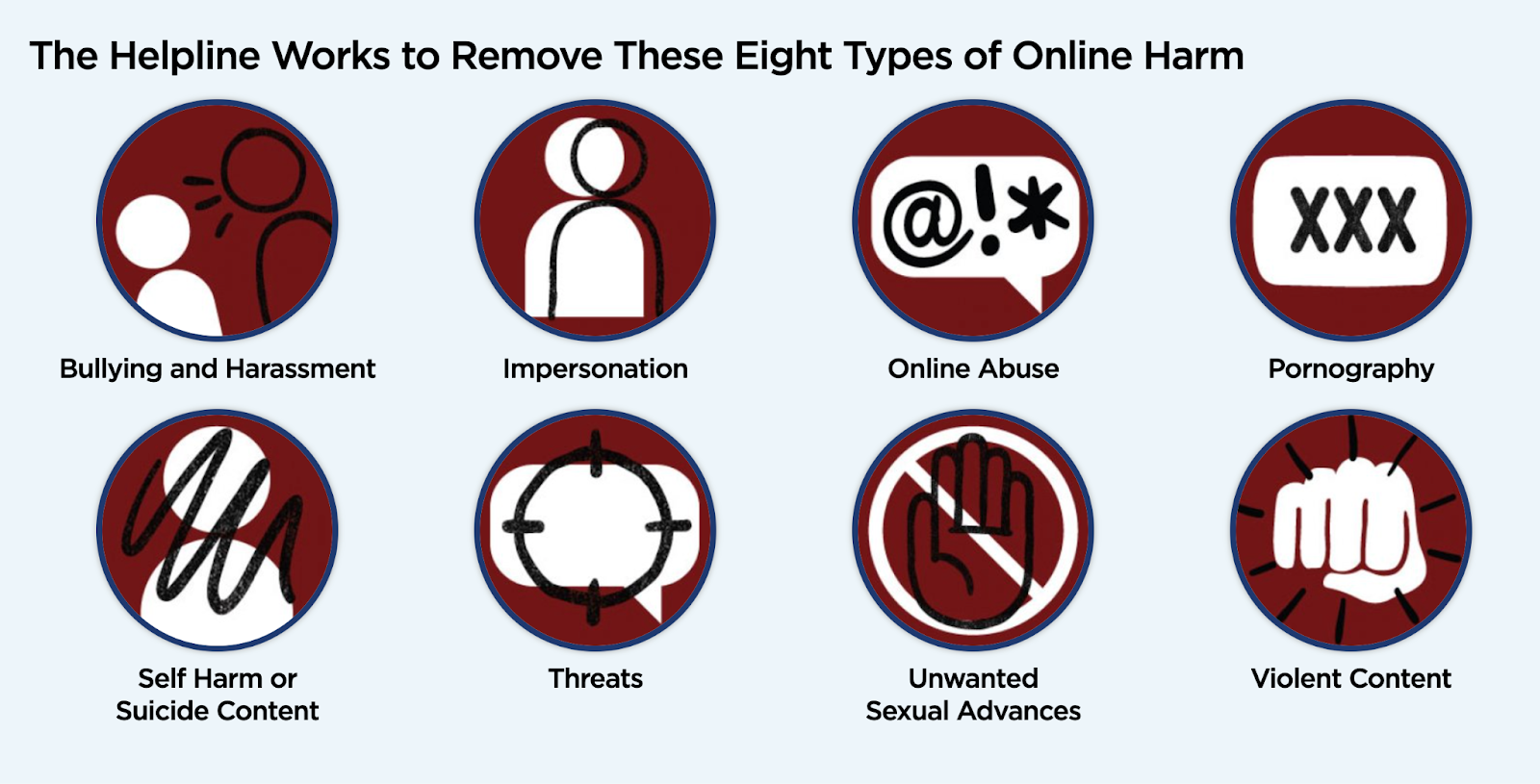
The ‘Report Harmful Content’ button allows children and families to report ‘lawful but awful’ and illegal content online. Reports are directed to a team of dedicated practitioners who review content, communicate with victims, offering guidance and mediatory support where needed. They are fully versed in legislation and online safety, ensuring that decisions towards harmful content are precise and fully justified. If a piece of content has remained online after a report to the platform, ‘Report Harmful Content’ can review the outcomes against community standards, help escalate it towards removal or justify further why it is allowed to remain online and offer further advice and support.
Key contacts for support
-
If you or someone else is in danger or a crime is being committed, call 999.
-
If you need to contact the police but it is not urgent, please call 101.
-
For 24/7 Mental Health support in a crisis, call 111 (select option 2)
-
If you have concerns that a young person is at risk or suffering harm, please call First Response (The front door to social services) on 0117 9036444. You can also submit safeguarding referrals by calling the Emergency Duty Team on 01454 615 165.
The Designated Safeguarding Lead at BCCS is Ms. Mia Helmich